
The Strategic Integration Of Generative Audio Within Modern Interactive Media
The primary obstacle for contemporary digital storytellers is often the disconnect between a high-quality visual narrative and a generic, uninspired background score. When creators rely on overused stock libraries, they risk diluting the emotional impact of their work, as audiences subconsciously recognize repetitive musical patterns from other media. This friction between creative vision and available resources frequently leads to projects that feel unfinished or amateurish. Utilizing an AI Music Generator provides a sophisticated solution to this problem, enabling the production of unique, royalty-free compositions that are tailored to the specific emotional arc of any visual project.
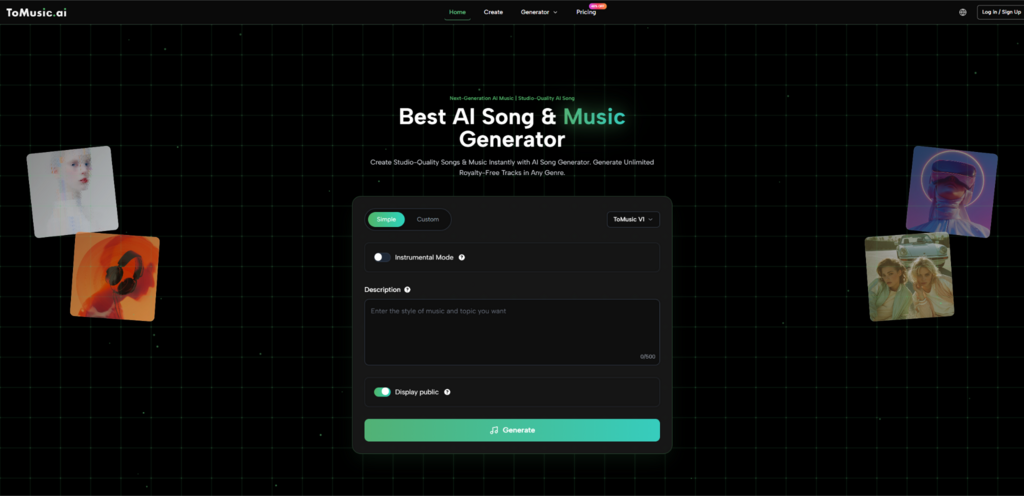
In my observation, the shift toward algorithmic composition represents a fundamental change in how we approach the economics of sound. Traditionally, securing a professional score required significant financial investment and lengthy negotiations with composers. Now, the ability to generate studio-quality tracks in real-time allows for a more iterative creative process. While some may worry about the loss of human nuance, current testing suggests that these platforms function best as a powerful extension of human intent, handling the technical complexities of arrangement while the user maintains final creative authority over the mood and direction.
The reliability of these systems is particularly evident when dealing with the constraints of modern content platforms. Whether for a high-stakes marketing campaign or a long-form video essay, the consistency provided by neural synthesis ensures that the audio remains a cohesive part of the brand identity. By removing the logistical barriers of traditional production, creators can spend more time refining their narrative and less time navigating the complexities of music licensing or the limitations of their own instrumental abilities.
Analyzing The Neural Architecture Of Contemporary Sound Synthesis Models
The underlying technology driving these platforms has advanced significantly, moving from simple MIDI-based loops to complex neural networks capable of understanding polyphonic structures. These models are trained on diverse datasets encompassing centuries of musical evolution, allowing them to grasp the subtle relationships between harmony, rhythm, and timbre. This deep understanding enables the system to generate music that does not just sound like a collection of notes, but rather a deliberate and emotionally resonant piece of art.
One of the most impressive technical feats of modern generative engines is the ability to maintain long-term coherence. In earlier versions of audio AI, tracks would often lose their structural integrity after the first sixty seconds, becoming dissonant or repetitive. However, with the introduction of the V4 architectures, it is now possible to generate coherent tracks up to eight minutes in length. This extension is a major breakthrough for creators who require consistent atmospheres for documentaries or extended gameplay videos, providing a stable foundation that traditional AI tools struggled to achieve.
Comparative Technical Frameworks For Digital Audio Production Services
Choosing the right service tier depends heavily on the specific needs of the project. Professional users often require features that go beyond simple file generation, such as the ability to isolate specific instruments or access higher-fidelity file formats. The following table provides a detailed comparison of the features available within various production environments to help creators make an informed decision based on their technical requirements.
| Technical Specification | Starter Production Tier | Unlimited Power Tier | Custom Enterprise Tier |
| Model Version Support | All Models V1-V4 | All Models V1-V4 | All Models V1-V4 |
| Maximum Track Length | 8 Minute Tracks | 8 Minute Tracks | Priority Duration |
| Export File Types | WAV and MP3 | WAV and MP3 | High-Resolution WAV |
| Stem Extraction Tool | Included | Priority Processing | Custom Separation |
| Generation Concurrency | 3 Simultaneous Tracks | 8 Simultaneous Tracks | High-Volume Access |
| Licensing Agreement | Commercial License | Commercial License | Full Global Rights |
Implementing Standardized Operational Procedures For High Volume Output
To achieve the highest level of efficiency when using these tools, creators should adopt a standardized workflow that minimizes the need for repeated adjustments and ensures a consistent output quality.
- Environmental Configuration: Select the most advanced neural model, such as V4, and define the required duration to ensure the AI has enough structural space to develop the musical theme.
- Data Submission: Input your descriptive prompts or lyrics, ensuring that you include specific cues for genre and mood to provide the engine with a clear creative roadmap.
- Refinement And Extraction: Evaluate the initial output and use the stem extraction tools to isolate the vocals or percussion if you need to perform additional mixing in an external workstation.

Psychological Resonance Of Algorithmic Melodies In Narrative Storytelling
The effectiveness of Text to Music technology lies in its ability to bridge the gap between abstract human emotion and concrete auditory data. When a user inputs a prompt like “bittersweet piano with light orchestral backing,” the AI is not simply searching a database for matches. Instead, it is synthesizing a unique piece of music based on its training on how those specific descriptors relate to musical scales and instrument choices. This allows for a level of precision in emotional signaling that was previously impossible without a live composer.
In my testing, the psychological impact of these generated tracks is remarkably similar to that of human-composed music. The system understands the use of crescendo to build tension and the use of minor keys to evoke sadness. However, it is important to note that the quality of the output is directly proportional to the clarity of the input. Users who provide context-rich descriptions tend to receive music that feels more “intentional” and less like a generic background track. This highlight the importance of the creator’s role as a director who guides the AI toward a specific narrative goal.
Evaluating Output Fidelity Across Diverse Musical Genres And Moods
The versatility of modern generative audio allows it to span a wide range of styles, from the aggressive energy of heavy metal to the calming textures of ambient class-room music. This breadth makes the technology applicable to almost any industry. For example, an educator might use the “Calming Classroom” mode to create a focused environment for students, while a fitness influencer might generate high-BPM tracks for a workout series. The stability of the V4 model across these different genres suggests that the AI has developed a robust understanding of genre-specific conventions.
The realism of the synthesized instruments is another area of significant improvement. The latest models can produce string sections that have a natural “breath” and percussion that feels dynamic rather than mechanical. While a trained ear might still detect subtle differences compared to a live recording in a world-class studio, the fidelity is more than sufficient for the vast majority of digital media applications. This makes high-end audio production accessible to millions of people who were previously excluded by the high cost of entry.
Architectural Advantages Of Stem Isolation In Professional Mixing Workflows
For professional producers, the final generated track is often just the beginning of the creative process. The ability to use Lyrics to Song AI to generate isolated vocal tracks is a transformative feature for those who wish to create custom remixes or mashups. By using the stem extraction tool, a producer can pull the vocals away from the instrumental backing and place them into a completely different musical context. This level of flexibility is what separates a basic generative tool from a professional-grade production platform.
My observation is that the stem extraction process has become significantly cleaner in recent months. Earlier versions often left “ghost” frequencies or artifacts when separating vocals from loud percussion. The current implementation appears much more stable, providing clean audio files that can be processed with professional plugins without losing their integrity. This is particularly useful for creators who want to maintain the “AI-generated” melody but replace the drums with their own custom samples, creating a unique hybrid of human and machine creativity.
Strategic Implementation Of AI Generated Assets In Commercial Media
Integrating these assets into a professional workflow requires a clear understanding of the technical steps involved in moving from a text prompt to a finished, mixed audio file.
- Lyric Integration: Enter your written prose into the lyrics field, making sure to use clear punctuation to help the AI understand where natural pauses and transitions should occur.
- Vocal Style Selection: Choose the appropriate vocal model and gender to match the tone of your project, then generate multiple variations to find the most suitable performance.
- Professional Mastering: Download the high-resolution WAV files and import the stems into your preferred editing software for final equalization and volume balancing.
The future of digital media will undoubtedly be shaped by these generative tools, but the most successful creators will be those who view them as a means to an end rather than a replacement for creative vision. By leveraging the speed and versatility of AI while maintaining a critical eye for quality, it is possible to produce content that is both commercially viable and artistically significant.